
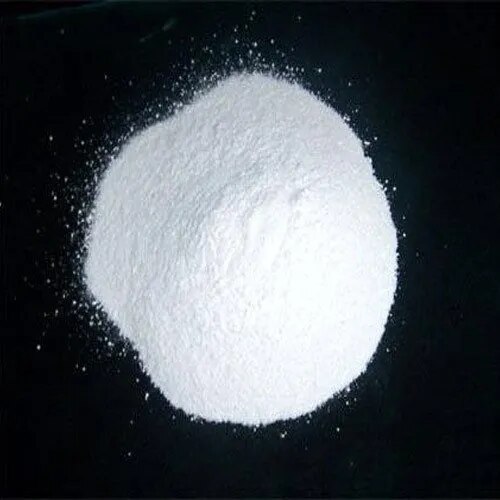
Aluminium acetate
Description
Aluminium acetate is a white, crystalline, water-soluble salt formed by the reaction of aluminium hydroxide with acetic acid, and is most commonly encountered as aluminium triacetate with the chemical formula
Al(CH
3
CO
2
)
3
Al(CH
3
CO
2
)
3
or
C
6
H
9
AlO
6
C
6
H
9
AlO
6
.
Chemical Description
Chemical formula:
Al(CH
3
CO
2
)
3
Al(CH
3
CO
2
)
3
or
C
6
H
9
AlO
6
C
6
H
9
AlO
6
.
Appearance: White, hygroscopic, crystalline solid.
Molecular weight: 204.11 g/mol.
Solubility: Highly soluble in water, forming a clear, colorless solution.
pH (aqueous solution): Around 4.5.
Melting point: Approximately 300°C.
Properties and Uses
Astringent and Antiseptic: Aluminium acetate is commonly used as a topical astringent to relieve skin irritation, inflammation, and itching—often in over-the-counter solutions for dermatological care, such as treating poison ivy, bites, or athlete’s foot.
Mordant in Dyeing and Printing: It is used in textile processing to help dyes and pigments adhere to fabrics.
Laboratory and Industrial Uses: It acts as a reagent and stabilizer in chemical syntheses and can also be used for waterproofing or fireproofing fabrics.
Chemical Structure
Aluminium acetate features a central aluminium atom bonded to three acetate anions via oxygen atoms, where each acetate group consists of a methyl group bound to a carboxyl group.
If you need the description in a specific format (e.g., for a website or catalog), or need details for a particular use, please specifyspecify.
Specifications
| Model No. | N-CH1154 |
|---|