
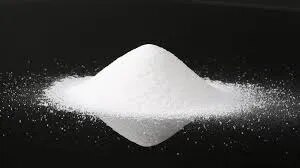
Ammonium Chloride
Description
Ammonium chloride is a white, odorless, crystalline inorganic compound with the chemical formula
N
H
4
C
l
NH
4
Cl. It is highly soluble in water, producing a mildly acidic solution due to the ammonium ion's hydrolysis. The compound is known for its sublimation property—on heating, it transitions directly from solid to gas, releasing ammonia and hydrogen chloride gases.
Key Properties
Chemical Formula:
N
H
4
C
l
NH
4
Cl
Molar Mass: 53.49 g/mol
Appearance: White, granular or crystalline powder; odorless
Density: 1.52–1.53 g/cm³
Melting/Sublimation Point: ~338–340 °C (sublimes without melting)
Solubility: Highly soluble in water, forms a slightly acidic solution (pH 4.6–6.0 for 5% in water)
Hygroscopic: Absorbs moisture from the air
Chemical Properties and Reactions
Decomposes to release ammonia and hydrogen chloride on heating:
N
H
4
C
l
→
N
H
3
+
H
C
l
NH
4
Cl→NH
3
+HCl.
Reacts with strong bases (e.g., sodium hydroxide) to produce ammonia gas.
Reacts with sodium carbonate to yield sodium chloride, carbon dioxide, water, and ammonia.
Applications
Fertilizer: Source of nitrogen for crops.
Metallurgy: Used in galvanizing, tinning, and soldering of metals to remove oxide coatings.
Medicine: Expectorant in cough medicine.
Batteries: Common electrolyte in dry cell batteries.
Laboratory: Used in buffer solutions and analytical chemistry.
Food Additive (E510): Used as a yeast nutrient in breadmaking and as a food additive in licorice.
Safety
Relatively low toxicity but can cause irritation if inhaled or ingested in large amounts.
Should be handled with basic chemical safety measures.
Specifications
| Model No. | N-CH1201 |
|---|