Congo Red pH indicator
Description
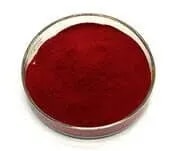
Congo Red pH indicator is a brownish-red powder or paper strip that undergoes a distinct color change from blue-violet (pH <3.0) to red-orange (pH >5.2), making it suitable for detecting acidic conditions in titrations and qualitative pH monitoring.
Identity and Composition
Chemical name: Congo Red (sodium salt of benzidinediazo-bis-1-naphthol-4-sulfonic acid); CI 22120.
Molecular formula: C₃₂H₂₂N₆Na₂O₆S₂; molecular weight 696.65 g/mol.
Form: Powder (soluble in water: 1 g/30 mL) or impregnated paper rolls.
Physical Properties
Appearance: Brownish-red odorless powder; pH of 1% solution 8.5–9.0.
Transition range: Blue-violet (pH 3.0) ⇌ red (pH 5.2).
Stability: Aggregates in high concentration/salinity/low pH; light-sensitive in solution.
Typical Uses
Acid-base indicator paper/ solution for qualitative pH testing (inverse of litmus).
Histology stain for amyloid (apple-green birefringence), plant/fungal cell walls, Gram-negative bacteria.
Textile/paper dye, biological stain.
Handling and Safety
Store sealed, protected from light/moisture. Potential carcinogen (azo dye); irritant—use PPE.
For catalog: “Congo Red pH indicator, brownish-red powder, pH 3.0 (blue-violet) to 5.2 (red), water-soluble, for acid detection/titrations; microscopy stain.”
Specifications
| Model No. | N-CH1626 |
|---|