Fehling’s Solution B
Description
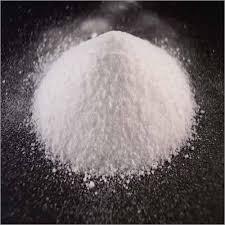
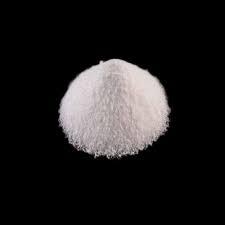
Fehling’s Solution B is a colorless alkaline solution primarily composed of potassium sodium tartrate (Rochelle salt) and sodium hydroxide. It is one of the two components used to prepare Fehling’s solution, the other being Fehling’s Solution A, a deep blue copper(II) sulfate solution. Fehling’s Solution B acts as a complexing agent that keeps copper ions in solution by forming a stable cupric tartrate complex, which serves as the oxidizing agent in the test.
Composition of Fehling’s Solution B:
Potassium sodium tartrate tetrahydrate (Rochelle salt) — around 20-35%
Sodium hydroxide — around 4.5-15%
Water — balance to 100%
Uses:
When combined with Fehling’s Solution A just before use, it forms Fehling’s reagent, used to detect reducing sugars and aldehydes.
In the presence of aldehydes, Fehling’s reagent is reduced, producing a characteristic reddish-brown precipitate of copper(I) oxide (Cu2O), indicating a positive test.
Commonly employed in qualitative analysis in biochemistry and organic chemistry.
Key Features:
Colorless, strongly alkaline solution
Contains complexing agents that stabilize copper ions away from precipitation before reaction
Stability: Fehling’s A and B are stored separately and combined fresh before testing because the reactive complex is unstable over time
Safety: Corrosive due to sodium hydroxide; handle with appropriate PPE
This information serves as a clear, technical description for laboratory reagent catalogs or educational resources describing Fehling’s Solution B.
Specifications
| Model No. | N-CH1771 |
|---|